Thursday, August 20, 2015

Betty MacDonald, Vashon Island and 10 million visitors a year


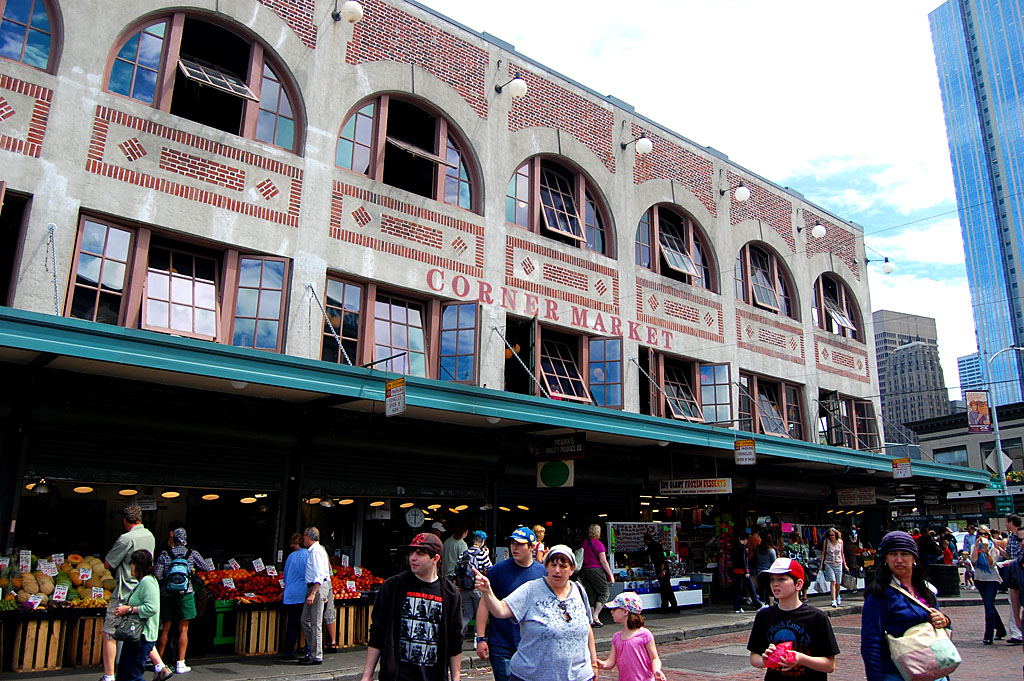
The Market’s official website says that it covers nine acres and attracts 10 million visitors a year.
That’s the good news and the bad news. They must have all been here when we were in town.

Betty MacDonald fan club fans,

do you know the answers of new Betty MacDonald fan club contest?

It's really kind of difficult to answer.


Is it A, B, C or D?

In which book did Betty MacDonald describe Pike Place Market?

I know it's a shame but I have no idea. 

I'll have to reread Betty MacDonald's books again.

I wished I could attend Wolfgang Hampel's new project Vita Magica but I'm living too far away. 

Betty MacDonald fan club founder Wolfgang Hampel wrote a great story of Pike Place Market.

He is going to present it on 'Vita Magica' in August.


I hope we'll be able to read Wolfgang Hampel's  new very well researched  stories about Betty MacDonald, Robert Eugene Heskett, Donald Chauncey MacDonald, Darsie Bard, Sydney Bard, Gammy, Alison Bard Burnett,  Darsie Beck, Mary Bard Jensen, Clyde Reynolds Jensen, Sydney Cleveland Bard, Mary Alice Bard, Dorothea DeDe Goldsmith, Madge Baldwin, Don Woodfin, Mike Gordon, Ma and Pa Kettle, Nancy and Plum, Mrs. Piggle-Wiggle and others - very soon.

It' s such a pleasure to read them. 
 

The next Vita Magica will be on August 25, 2015. 

Betty MacDonald fan club honor member Mr. Tigerli  and our 'Italian Betty MacDonald' - Betty MacDonald fan club honor member author and artist Letizia Mancino belong to my favourites too.

I can't wait to read how is our brilliant Mr. Tigerli doing.

I know he will be able to support our politicans and his/their many girl friends.

Mr. Tigerli is simply a great guy!!!!

I'm visiting Letizia Mancino's  outstanding Betty MacDonald Gallery very often.

Thanks a million for creating this special gift for Betty MacDonald fan club fans from all over the World.

Don't miss Brad Craft's 'Daily Dosis', please. 

You'll enjoy it very much.

I adore Betty MacDonald's very beautiful Vashon Island.

A paradise for me!

Have a very nice Friday,

Andrea


Vita Magica

Betty MacDonald fan club

Betty MacDonald forum  

Wolfgang Hampel - Wikipedia ( English ) 

Wolfgang Hampel - Wikipedia ( German )

Wolfgang Hampel - Ma and Pa Kettle - Wikipedia ( English ) 

Wolfgang Hampel in Florida State University 

Betty MacDonald fan club founder Wolfgang Hampel 

Betty MacDonald fan club interviews on CD/DVD


Betty MacDonald fan club items 

Betty MacDonald fan club items  - comments

Betty MacDonald fan club organizer Linde Lund 

Wednesday, August 19, 2015

Betty MacDonald and her great experiences on Pike Place Market

http://www.watsonadventures.com/wp-content/uploads/2013/02/Seattle-Pike-Pl-Market-e1360431813737.jpg


Betty MacDonald fan club fans,

great Betty MacDonald fan club news.

A new Betty MacDonald fan club contest!

Send us a mail please with your answer ( see questions below )  

A, B, C or D?

You also have to answer this Betty MacDonald fan club contest question:

Betty MacDonald described Pike Place Market in her book   ........................

Pike Place Market celebrated its 108th birthday on August 17, 2015.

Did you know Pike Place Market was almost demolished in the 1960s?

For Betty MacDonald fan club contest can you figure out why Pike Place Market was nearly torn down?

A. It was severely damaged by the Great Seattle Fire.

B. A tsunami hit Seattle, destroying parts of the Market.

C. Gold was discovered underground, beneath the Market.

D. A proposal was being seriously considered to replace the Market with a plaza that would include a hotel, an apartment building, four office buildings, a hockey arena, and a parking garage.

Deadline: August 31, 2015

Don't miss your chance, please to win the most interesting Betty MacDonald fan club items.


Wolfgang Hampel's new project Vita Magica is very fascinating because he is going to include Betty MacDonald, other members of the Bard family and Betty MacDonald fan club honor members.

Betty MacDonald fan club founder Wolfgang Hampel wrote a great story of Pike Place Market.

He is going to present it on 'Vita Magica' in August.


It's simply great to read Wolfgang Hampel's  new very well researched  stories about Betty MacDonald, Robert Eugene Heskett, Donald Chauncey MacDonald, Darsie Bard, Sydney Bard, Gammy, Alison Bard Burnett,  Darsie Beck, Mary Bard Jensen, Clyde Reynolds Jensen, Sydney Cleveland Bard, Mary Alice Bard, Dorothea DeDe Goldsmith, Madge Baldwin, Don Woodfin, Mike Gordon, Ma and Pa Kettle, Nancy and Plum, Mrs. Piggle-Wiggle and others.
 

The next Vita Magica will be on August 25, 2015. 

Betty MacDonald fan club honor member Mr. Tigerli  and our 'Italian Betty MacDonald' - Betty MacDonald fan club honor member author and artist Letizia Mancino belong to the most popular Betty MacDonald fan club teams in our history.

Their many devoted fans are waiting for a new Mr. Tigerli adventure.

Letizia Mancino's  magical Betty MacDonald Gallery  is a special gift for Betty MacDonald fan club fans from all over the world.


Don't miss Brad Craft's 'More friends', please. 

Betty MacDonald's very beautiful Vashon Island is one of my favourites

Wishing you a great Thursday,

Franca


Vita Magica

Betty MacDonald fan club

Betty MacDonald forum  

Wolfgang Hampel - Wikipedia ( English ) 

Wolfgang Hampel - Wikipedia ( German )

Wolfgang Hampel - Ma and Pa Kettle - Wikipedia ( English ) 

Wolfgang Hampel in Florida State University 

Betty MacDonald fan club founder Wolfgang Hampel 

Betty MacDonald fan club interviews on CD/DVD


Betty MacDonald fan club items 

Betty MacDonald fan club items  - comments

Betty MacDonald fan club organizer Linde Lund 

Betty MacDonald, Madge Baldwin, Betty MacDonald fan club newsletter

http://seattletimes.com/ABPub/2011/06/16/2015337656.jpg


Betty MacDonald fan club fans,

Betty MacDonald fan club newsletter August includes an article by Mats.

Mats belongs to the most successful Betty MacDonald fan club researchers ever.

He shares his new Betty MacDonald fan club research results including some new documents of Betty MacDonald's adopted sister Madge.

Thank you so much dearest Mats!

Betty MacDonald described Madge in her book 'The plague and I'.

It's really great that all the Betty MacDonald fan club interviews by Betty MacDonald fan club founder Wolfgang Hampel will be published in the future. 


Who is reading Betty MacDonald's and Johann Wolfgang von Goethe's unique books at the moment?


Take care,

Hanna


Vita Magica

Betty MacDonald fan club

Betty MacDonald forum  

Wolfgang Hampel - Wikipedia ( English ) 

Wolfgang Hampel - Wikipedia ( German )

Wolfgang Hampel - Ma and Pa Kettle - Wikipedia ( English ) 

Wolfgang Hampel in Florida State University  

Betty MacDonald fan club founder Wolfgang Hampel 

Betty MacDonald fan club interviews on CD/DVD


Betty MacDonald fan club items 

Betty MacDonald fan club items  - comments

Betty MacDonald fan club organizer Linde Lund 


Tuesday, August 18, 2015

Betty MacDonald and moving to Vashon Island

Betty MacDonald in the living room at Vashon on the cover of The Saturday Evening Post.

Betty MacDonald fan club fans,

great Betty MacDonald fan club news.


Betty MacDonald fan club fan club got many new fans from all over the world including Australia.

Welcome dearest Betty MacDonald fan club fans!  


A Betty MacDonald fan club fan from Canada is going to share a very important letter by Betty MacDonald.

Betty MacDonald mentions in detail the original version of The Egg and I and the differences with the final edition of her first book. 

Greta and her Betty MacDonald fan club research team are working on an article for Betty MacDonald fan club newsletter.

Imagine to read the exciting experiences of  Betty MacDonald and Claudette Colbert in Hollywood. 

There is also a letter by Betty MacDonald's sister unique sister Mary Bard Jensen with some very witty thoughts and comments.

You'll enjoy it very much. 
 
There will be an extra Betty MacDonald fan club article describing the new Betty MacDonald fan club treasure.

Betty MacDonald fan club founder Wolfgang Hampel and Betty MacDonald fan club research team are going to include all these new details and info in updated Betty MacDonald biography.

More info in Betty MacDonald fan club newsletter September. 


Wolfgang Hampel's new project Vita Magica is  fascinating because he is going to include Betty MacDonald, other members of the Bard family and Betty MacDonald fan club honor members.


Don't miss Brad Craft's 'More friends', please. 


New Betty MacDonald documentary will be very interesting with many interviews never published before.

We hope beloved  Betty MacDonald fan club honor member Mr. Tigerli  will be able to enjoy his life although he has to solve so many problems with some very hard headed politicans.


Brad Craft's 'More friends' is very interesting and you shouldn't miss it.

Betty MacDonald's very beautiful Vashon Island is a paradise.

Perhaps Eartha and I are going to move there one day.


Best wishes,

Anita and Eartha Kitt II


Vita Magica

Betty MacDonald fan club

Betty MacDonald forum  

Wolfgang Hampel - Wikipedia ( English ) 

Wolfgang Hampel - Wikipedia ( German )

Wolfgang Hampel - Ma and Pa Kettle - Wikipedia ( English ) 

Wolfgang Hampel in Florida State University 

Betty MacDonald fan club founder Wolfgang Hampel 

Betty MacDonald fan club interviews on CD/DVD


Betty MacDonald fan club items 

Betty MacDonald fan club items  - comments

Betty MacDonald fan club organizer Linde Lund 


Monday, August 17, 2015

Betty MacDonald and her books by Claire Dederer

 https://blogger.googleusercontent.com/img/b/R29vZ2xl/AVvXsEjNGAWafYoW_jrf1Kh_WbF9bUu5fvx5gEiXSGSC2bMODurFPzFMMT2jL-nd1Sxedf6Mmhn7Xo9Dlp96HhktvX7leFmpMfBWRNcGp3OrdqMCb8MaIph_uy5yhGP9rXfRvVQKGnZ3tVmb6oBK/s1600/bards.jpg
    Mary Bard Jensen and Betty MacDonald

Claire Dederer, Author of Poser : My Life In Twenty-Three Yoga Poses
lives in Seattle and writes about books and culture for the New York Times, Vogue, Newsday, and many other publications.

Dear Betty MacDonald fan club fans,

I knew of the Betty MacDonald Fan Club but didn't know its activities were so extensive.


That's wonderful.

I checked in with the magazine and they said please feel free to reprint or repost.


I will keep you updated if I do any more pieces on Betty.

Thanks so much for all you are doing!

All the best,

Claire Dederer


Second Read — January / February 2011 Her Great Depression

Re-reading Betty MacDonald’s Anybody Can Do Anything, on the Northwest’s bust years

By Claire Dederer

From the time I was nine or ten, I carried a spiral-bound Mead notebook with me at all times. I wanted to be a writer, felt I probably already was a writer, and feared I would never be a writer. I was constantly looking for clues that would tell me that someone like me, someone from Seattle, someone who was a girl, someone who was no one, might be able to write a book. A book that got published.

I was always on the lookout for a message, something that would tell me that this thing could be done. I realize now that what I was looking for was an influence. Influence is a message about what is possible, sent by book from one writer to another. Different writers are looking for different messages. As a child, the message I sought was simple: This place is worth writing about.

Just as I was a nobody, Seattle at that time was a non-place in literature. This was the 1970s. There were few nationally published authors from Seattle. Whenever I encountered any writing at all about the Northwest, I fell upon it gratefully. I was happy to read anything that had blackberries and Puget Sound and Douglas firs and the names of the streets downtown. I read Richard Brautigan stories; Ken Kesey’s Sometimes a Great Notion, though I didn’t even pretend to enjoy it; collections of columns by crabby old Seattle Post-Intelligencer newspapermen of the 1950s; poems by Carolyn Kizer. I read Tom Robbins and was embarrassed by the sex. I read Mary McCarthy’s first memoir, but she seemed to hate the place.

And, eventually, I read Betty MacDonald. She had been there all along, on my own shelves, in the form of her familiar, tattered Mrs. Piggle-Wiggle books. Then, browsing my mother’s shelves one summer afternoon, I came upon a grown-up book by MacDonald: Anybody Can Do Anything.

I had seen it before but assumed it belonged to the dreary crop of self-help books that had mushroomed on my mother’s shelves over the past few years. Bored enough, I picked it up—and found therein an enchanted world. Enchanted because it was exactly real. Anybody Can Do Anything is Betty MacDonald’s story of how she and her family weathered the Depression in an old wood-frame house (not unlike my family’s) in the University District (just a mile or two from where I lived). And though my historical circumstances were very different from hers, our shared geography was enough to make me feel that I was seeing my life reflected in her pages.

It’s funny to think of a time when Betty MacDonald’s books were new to me. Over the years I would come to know them the way I knew houses in my own neighborhood—with a casual intimacy. MacDonald began writing toward the end of her short life, in the 1940s, when she had found happiness with her second husband on their blackberry-ridden acreage on Vashon Island in Puget Sound. Her first book was The Egg and I, set in the 1920s. This chronicle of MacDonald’s life on an Olympic Peninsula chicken farm with her first husband would become her most famous book, make her a fortune, and form the basis of a wildly successful 1947 film. This, putting aside her books for children, was followed by The Plague and I, a surprisingly entertaining account of her stint in a tuberculosis sanitarium just north of Seattle. How she created a ripping yarn out of lying in bed for a year is one of life’s mysteries. Next came Anybody Can Do Anything, which I held in my hands. Finally she wrote Onions in the Stew, about life on Vashon Island, which came in 1955, just three years before she succumbed to cancer at the age of forty-nine.

But it was Anybody Can Do Anything, with its Seattle locale and its scrappy, cheerful message of survival, which spoke most directly to me.

As the book opens and the Depression begins, MacDonald has been living on the chicken farm in damp exile from her real life in Seattle. Married at twenty, she had followed her husband to the Olympic Peninsula so he could live his agrarian dream. Now she has reached her breaking point with the rain, the chickens, the monomaniacal husband, the whole affair. “Finally in March, 1931, after four years of this,” she recounts, “I wrote to my family and told them that I hated chickens, I was lonely and I seemed to have married the wrong man.” She snatches up her little daughters and makes her long, rainy, difficult way back to the city by foot, bus, and ferry.

There she and her girls are folded happily back into her large family’s bosom. Her mother’s “eight-room brown-shingled house in the University district was just a modest dwelling in a respectable neighborhood, near good schools and adequate for an ordinary family. To me that night, and always, that shabby house with its broad welcoming porch, dark woodwork, cluttered dining-room plate rail, large fragrant kitchen, easy book-filled firelit living room, four elastic bedrooms…represents the ultimate in charm, warmth and luxury.”

The book describes life in that teeming, cozy household with her mother, her three sisters, her brother, and her two little girls, plus whoever else might be sleeping over in one of those elastic bedrooms. It also details the literally dozens of weird and none-too-wonderful jobs that MacDonald held throughout the Depression: hapless secretary to businessmen of every stripe, fur-coat model, photo retoucher, rabbit rancher, firewood stealer, Christmas tree decorator, baby sitter, receptionist to a gangster.

The author jumps from job to job, with whole industries blowing up behind her as she leaves, like Tom Cruise running from an exploding warehouse. She’s hustled along in the ever-shrinking job market by her sister Mary, who considers herself an “executive thinker.”

Mary has a job ready for Betty as soon as she gets off the bus from the egg farm, never mind that Betty is utterly unqualified. Mary won’t hear of such talk. She is quick to admonish her sister: “There are plenty of jobs but the trouble with most people, and I know because I’m always getting jobs for my friends, is that they stay home with the covers pulled up over their heads waiting for some employer to come creeping in looking for them.”

The truth of this statement is disproved throughout the book. There were certainly not plenty of jobs. The portrait of Depression-era Seattle that emerges is definitively—though quietly—desperate. But on my first read, I hardly clocked the despair. I just thrilled to the evocation of my home, captured in such throwaway phrases as, “There was nothing in sight but wet pavement and wet sky.” MacDonald describes places that still existed, that I myself knew—the I. Magnin’s at the corner of Sixth and Pine, the palatial movie theater named the Neptune. Here she is on the Pike Place Market:

The Public Market, about three blocks long, crowded and smelling deliciously of baking bread, roasting peanuts, coffee, fresh fish and bananas, blazed with the orange, reds, yellows and greens of fresh succulent fruits and vegetables. From the hundreds of farmer’s stalls that lined both sides of the street and extended clear through the block on the east side, Italians, Greeks, Norwegians, Finns, Danes, Japanese and Germans offered their wares. The Italians were the most voluble but the Japanese had the most beautiful vegetables.

Such descriptions caused a strange firing in my brain. I was accustomed to imagining locations from books; there was a deep pleasure in having that necessity for once removed. Even the food they ate was the food we ate. For special treats, MacDonald tells of buying Dungeness crabs and Olympia oysters, just as my family did.

I saw, illustrated perfectly, and in the cold light of nonfiction, the possibility that Seattle might be the setting for a book. I would not be struck so thoroughly by the possibility of a true Northwest literature until I started reading Raymond Carver in the mid-1980s. 


My mother told me that Betty MacDonald had died in the 1950s, but that her niece lived in our very own neighborhood. I walked by the house, gazing at it with a true feeling of awe: the niece of an author lived therein! Of course I knew authors were real people. But Betty MacDonald was more than real; she was tangible. She was prima facie evidence that the materials I had at hand—those trees, that rain—were enough.

Other writers came and went; Betty MacDonald was among those who endured for me. This was because she was funny. No, that’s not quite right. Though I didn’t have the language for it when I first read her, Betty MacDonald was comic. As I became a writer myself, I studied her, trying to figure out just how she did it.

She wrote long, ridiculous set pieces about her various jobs. She wrote hilarious portraits of her bosses, who in her hands become one long parade of human oddity. She wrote fondly of her family’s eccentricities. But above all, she wrote with unflagging self-abasement. Her books twanged with the idea that one’s own ridiculousness was comedy enough. A good example of her rueful tone:
Until I started to night school, my life was one long sweep of mediocrity. While my family and friends were enjoying the distinction of being labeled the prettiest, most popular, best dancer, fastest runner, highest diver, longest breath-holder-under-water, best tennis player, most fearless, owner of the highest arches, tiniest, wittiest, most efficient, one with the most allergies or highest salaried, I had to learn to adjust to remarks such as, “My, Mary has the most beautiful red hair I’ve ever seen, it’s just like burnished copper and so silky and curly—oh yes, Betty has hair too, hasn’t she? I guess it’s being so coarse is what makes it look so thick.”

It almost goes without saying that she distinguishes herself in night school by being the absolute worst student in every class.
MacDonald was master of the comic memoirist’s first art: self-deprecation. Other types of memoirists value lyricism, or shock tactics. Comic memoirists are utterly dependent on knowing that they themselves are the silliest people in any given room.
I know whereof I speak—I am this year publishing a memoir about my own very, very ordinary life. Memoirists like me are writing what author Lorraine Adams has called “nobody” memoirs. As she said in a 2002 piece in the Washington Monthly, such memoirists are “neither generals, statesmen, celebrities, nor their kin.”
How, then, to proceed? You’re nobody. You want to write a memoir. Your first order of business is to let readers know that you know that they know you’re a nobody. So you must imply your unimportance as quickly as possible, and never, ever stop. By means of that simple dynamic, the memoirist makes a friend rather than an enemy of her reader.

In Anybody Can Do Anything, MacDonald fails again and again. It’s an entire book about failure: her own, and the economy’s. It’s also about persisting in the face of one’s own admitted shortcomings. What she wants is a job commensurate with her skills, which she presents as nil: “I wanted some sort of very steady job with a salary, and duties mediocre enough to be congruent with my mediocre ability. I had in mind sort of a combination janitress, slow typist and file clerk.” 


Finally, she washes up safely on the sandbar of government work, taking a job at the Seattle branch of the National Recovery Administration, the New Deal agency started in 1933 and charged with organizing businesses under new fair-trade codes. There she felt right at home, surrounded by federal-level incompetence: “There were thousands of us who didn’t know what we were doing but were all doing it in ten copies.”
MacDonald is rarely remembered for her wry tone. When she’s remembered at all, she is preceded not by her own reputation, but that of the big-screen version of The Egg and I, starring Claudette Colbert and Fred MacMurray, which is pretty nearly unwatchable. In the film, Ma and Pa Kettle—neighbors who are fondly, if broadly, drawn in the book—have been turned into tobacco-spitting, raccoon-roasting caricatures. And the public loved them. On the movie poster, the faces of these two crackers loom huge; Colbert and MacMurray cower tinily in the corner. Ma and Pa Kettle proved so popular that nine more films were made about them and their fictional fifteen children, and Betty MacDonald lost all hope of being taken seriously as a writer.

Many years after all of this, I was having dinner with a British writer who had undertaken to write about the Northwest. “You have to be careful about using too much humor, otherwise you end up sounding like Betty MacDonald: housewife humor,” he said, finishing in scathing (if posh) tones. MacDonald has been trapped in this role of domestic lightweight. But her writing, with its quiet irreverence, has more in common with, say, Calvin Trillin or Laurie Colwin, than it does with a mid-century housewife humorist like Erma Bombeck. (Though, really, what’s so bad about Erma Bombeck?)

What MacDonald models in her writing is actually very freeing—self-deprecation as a kind of passport to the ordinary. With it, you can take your reader into the most mundane details of your life, and they will often go.

I teach adult writing students. When we work on memoir, they want to write pieces about what they’ve achieved. About their good marriages. About their sterling qualities. “Nobody wants to hear about that except your mother!” I tell them. Which is never very popular. Even so, I try to explain the Betty MacDonald principle to them: what people want to see in the memoir are reflections of their own failures and smallnesses. If you can show readers that you have those same failures, those same smallnesses, and make them laugh about it, they will love you. Or at least like you. Or at least accept you as a fellow nobody.

These simple things would be enough for me: a story of Seattle; a tale told with self-deprecating humor. But what MacDonald achieves in Anybody Can Do Anything is something more than that: a finely observed journalistic record of her time.
The ridiculous set pieces, the fond portraits of her family, and what New York Times critic Bosley Crowther called the “earthy tang” of her writing do not seem like indicators of a work of serious journalism. But MacDonald is getting down on paper what she sees happening all across Seattle, and ultimately providing us with a rough draft of history. The details of home and work life accrue, anecdotes pile up, and suddenly the reader has a real sense of daily existence in the West during the 1930s. This is a cheerful, unassuming way of documenting a socially and economically turbulent period. But it’s documentation nonetheless.

Take, for example, MacDonald’s account of one of her earliest jobs. This chapter encapsulates the uneasiness of the early part of the Depression, eerily suggestive of the economic tenterhooks we’ve been on since 2007. She’s been summarily fired from her first job as executive secretary to a miner, so the ever-resourceful Mary has found her a job at her own office, where she works for a lumber magnate. When Betty protests that she hasn’t any of the qualifications the lumberman is looking for in a secretary, Mary tells her not to fret. “‘You thought you couldn’t learn mining,’ Mary told me when she installed me as her assistant in the office across the street. ‘There’s nothing to lumber, it’s just a matter of being able to divide everything by twelve.’?”

As she makes her way to work each morning, MacDonald is nervous but glad of the work: “Now I grew more and more conscious of the aimlessness and sadness of the people on the streets, of the Space for Rent signs, marking the sudden death of businesses, that had sprung up over the city like white crosses on the battlefield and I lifted myself up each morning timidly and with dread.”
Her employer’s business is clearly failing, but MacDonald feels she shouldn’t leave her boss, Mr. Chalmers, in the lurch. She intends to stay until the end. “And I did,” we read, “in spite of Mr. Chalmers’ telling me many times that the Depression was all my fault, the direct result of inferior people like me wearing silk stockings and thinking they were as good as people like him.” Again, this blame-the-victim language recalls some of the rhetoric of today’s subprime mortgage crisis. But despite the boss’s efforts to draw a sociological line in the sand, he too is laid low by the economic downturn, and the chapter comes to an abrupt end: “Lumber was over.”

The author and her family soon lose their phone service, their electricity, their heat. Being Betty MacDonald, she makes it all sound rather jolly. She tells of endless bowls of vegetable soup eaten by candlelight. And when she complains about being broke, she does it with typical good humor: “There is no getting around the fact that being poor takes getting used to. You have to adjust to the fact that it’s no longer a question of what you eat but if you eat.”
But sometimes the details tell the story that the tone masks. When the heat and the electricity have been turned off, the family relies upon old Christmas candles for light and firewood for heat: “When we ran out of fireplace wood, Mary unearthed a bucksaw and marched us all down to a city park two blocks away, where we took turns sawing up fallen logs.” Here, despite the characteristic pluck, you feel straits getting uncomfortably dire.
This isn’t an overlay of social commentary sitting awkwardly atop a narrative. Instead, such commentary is tightly knitted to MacDonald’s own experience. When she notices that “[e]very day found a little better class of people selling apples on street corners,” she’s not making an idle observation—she’s wondering if she’s next.

When I came to write my own memoir, I was telling a small, personal story about being a mom at the turn of the millennium. I wanted to link the story to larger cultural forces I had observed, to what I saw as a kind of generational obsession with perfect parenting. In Betty MacDonald’s writing, I once again found just the model I needed. It was possible to connect the larger story around me to my own small story, without pretending to be definitive or historical. In fact, the more I focused on the details of my own very particular experience, the more I could give a feeling of the culture that I swam in.

The message that Betty Macdonald sent me, through this book, is one of sufficiency: Your small life is enough. Other writers might be looking for a message that will feed their huge ambitions. From books, they learn how far they might go with their own writing. For me, the question has always been: How close to home might I stay?


MacDonald’s qualities as a writer—the focus on the very local, the self-deprecating humor, the careful and personal observation of social changes—are modest qualities. They inspire through their very humility. The homely, says Betty MacDonald, is more than enough. This was the message I needed to hear. There’s a clue, of course, right there in the title. It’s been telling me since I was a girl, right up through the time I became a writer myself: Anybody can do anything. Even this. Even you.

Such lack of pretension doesn’t necessarily come with great rewards. There are no monuments to Betty MacDonald. No endowed chairs, no scholarships, not even a public library conference room named after her. But in the shallow green bowl of Chimacum Valley, a two-lane road leads to the chicken farm where MacDonald lived for four tough years. It’s been renamed “The Egg and I Road.” It veers west from Route 19, cutting through farmland before heading up a hill into some evergreens. It’s nothing special. It’s just ordinary. It’s just a county road.


Vita Magica

Betty MacDonald fan club

Betty MacDonald forum  

Wolfgang Hampel - Wikipedia ( English ) 

Wolfgang Hampel - Wikipedia ( German )

Wolfgang Hampel - Ma and Pa Kettle - Wikipedia ( English ) 

Wolfgang Hampel in Florida State University 

Betty MacDonald fan club founder Wolfgang Hampel 

Betty MacDonald fan club interviews on CD/DVD


Betty MacDonald fan club items 

Betty MacDonald fan club items  - comments

Betty MacDonald fan club organizer Linde Lund 

Sunday, August 16, 2015

Betty MacDonald, Wolfgang Hampel and Betty MacDonald fan club items


Betty MacDonald fan club fans,

in 1996 Betty MacDonald's family had been interviewed by journalist and author Wolfgang Hampel

The family members shared very interesting details regarding fascinating life and work of Betty MacDonald. 

Especially Betty's youngest sister Alison Bard Burnett had a perfect memory and shared golden Bard memories. 

She got the same talent as her famous sister Betty MacDonald. 

Betty MacDonald Interviews published 2009 on CD/DVD by Betty MacDonald Fan Club incl. the biography of Betty MacDonald written by Wolfgang Hampel - The Kettles' Million Dollar Egg, The Egg and Betty, The Tragic End Of Robert Heskett, Betty MacDonald in Hollywood, BettyMacDonald's Illness and other biographical stories.


Betty MacDonald fan club founder Wolfgang Hampel's outstanding Betty MacDonald fan club items and interviews are included in 


FLORIDA STATE UNIVERSITY
COLLEGE OF ARTS AND SCIENCES 
THE EGG AND US: 
CONTEXTUALIZATION
AND HISTORICIZATION 
OF BETTY MACDONALD’S WORKS 
By
SAMANTHA HOEKSTRA 
A Thesis submitted to the
Department of History
in partial fulfillment of the
requirements for the degree of
Master of Arts 
Degree Awarded: 
Spring 2014


Wolfgang Hampel's new project Vita Magica is  fascinating because he is going to include Betty MacDonald, other members of the Bard family and Betty MacDonald fan club honor members.

Betty MacDonald fan club honor member Mr. Tigerli  and our 'Italian Betty MacDonald' - Betty MacDonald fan club honor member author and artist Letizia Mancino belong to the most popular Betty MacDonald fan club teams in our history.

Their many devoted fans are waiting for a new Mr. Tigerli adventure.

Letizia Mancino's  magical Betty MacDonald Gallery  is a special gift for our Betty MacDonald fan club fans.  


Don't miss Brad Craft's 'More friends', please. 

I'm rereading Onions in the Stew and I'd like to live on Betty MacDonald's very beautiful Vashon Island.

Wishing you a very sunny Sunday,

Mats

Vita Magica

Betty MacDonald fan club

Betty MacDonald forum  

Wolfgang Hampel - Wikipedia ( English ) 

Wolfgang Hampel - Wikipedia ( German )

Wolfgang Hampel - Ma and Pa Kettle - Wikipedia ( English ) 

Wolfgang Hampel in Florida State University 

Betty MacDonald fan club founder Wolfgang Hampel 

Betty MacDonald fan club interviews on CD/DVD


Betty MacDonald fan club items 

Betty MacDonald fan club items  - comments

Betty MacDonald fan club organizer Linde Lund 


Friday, August 14, 2015

Betty MacDonald and Betty MacDonald fan club founder Wolfgang Hampel


Betty MacDonald fan club fans,

this is an article by Axel Schappei published in 1983.

Wolfgang Hampel founded Betty MacDonald fan club  in 1983 with only four members.

In 2015 Betty MacDonald fan club got members from 40 countries from all over the World.

A great success story!

Read and enjoy!

Join Betty MacDonald fan club contest, please.


Deadline: August 15, 2015 

Very exciting Betty MacDonald fan club info:


Betty MacDonald fan club newsletter August includes the updated Betty MacDonald fan club essay ' Betty MacDonald and Dorita Hess '. 


Wolfgang Hampel's new project Vita Magica is a fascinating one because he is going to include Betty MacDonald, other members of the Bard family and Betty MacDonald fan club honor members.

It's simply great to read Wolfgang Hampel's  new very well researched  stories about Betty MacDonald, Robert Eugene Heskett, Donald Chauncey MacDonald, Darsie Bard, Sydney Bard, Gammy, Alison Bard Burnett,  Darsie Beck, Mary Bard Jensen, Clyde Reynolds Jensen, Sydney Cleveland Bard, Mary Alice Bard, Dorothea DeDe Goldsmith, Madge Baldwin, Don Woodfin, Mike Gordon, Ma and Pa Kettle, Nancy and Plum, Mrs. Piggle-Wiggle and others.
 

The next Vita Magica will be on August 25, 2015. 

Have a very nice Saturday,

Take care,

Bengt


Betty MacDonald loved in Germany

Axel Schappei The Vashon-Maury Island Beachcomber June 16, 1983

Go into any ordinary German bookstore and ask for former Islander, Betty MacDonald's paperbacks and you'll be handed - at least - three books: Die Insel und ich ( Onions in the Stew ), Das Ei und ich ( The egg and I ) Betty kann alles (Anybody can do anything).


Scholars in the Pegasus German courses on the Island may notice that the German titles of Betty MacDonald's famous autobiographical novels have been translated appropriatley.
Betty would like them. Betty MacDonald, who lived on Vashon Island, is tremendously popular in Germany. She once was one of the most well known and widely read novelists in the United States. But would you guess that more than two million paperbacks and hard-cover books of Betty MacDonald have been published and sold in Germany during the last 30 years? 

Her bestseller The Egg and I reached about half a million in July 1981. From March 1964 until October 1980, 107000 copies of Anybody can do anything were sold in 12 editions. Onions in the Stew - her novel about living on the Rock - sold 103000 copies from May 1964 until September 1980, also in 12 editions. "She is incredibly successful, really, not only her novels. Her books for children like Nancy and Plum or the Mrs. Piggle-Wiggle-Stories still belong to the most successful childrens' books after all those years," says Wolfgang Hampel, who is so convinced about Betty MacDonald. 

He simply loves Betty MacDonald and her books: "She's so homorous, her stories about everyday-life's and awkward situations are just incomparable. It's like a good friend taking you be the hand and leading through her life." 

That's why Wolfgang Hampel and four other German Betty Fans plan to launch an extensive exhibition about Betty MacDonald, her life and her work.

Originally they wanted to open the exhibit on February 7, 1983, 25th anniversary of Betty MacDonald's death. But the five friends didn't manage to get enough exhibits together. "We're still looking for pictures, photographs, letters - in short all sorts of personal mementoes about Betty. Our exhibition has been planned for the last few years and we have written zillions of letters and bought hundreds of books, here in Germany, Europe and from the States," explains Wolfgang Hampel.They tried to get further information about their preferred author from American publishing companies. "Some didn't answer and others know less than we did already! It was like finding the different pieces of a jigsaw-puzzle without knowing what it will look like in the end." 

Why all this activity?"We think that Betty MacDonald is such a fascinating person that many people here should know more about her . Apart from our endeavors to our exhibition together we've also been in contact with publishers to convince them that a new edition of Nancy and Plum would find its readers still today.

Betty MacDonald's readers come from all ages and social groups," says Wolfgang Hampel. Of course he and his friends know that Vashon is the Onions in the Stew Island and they also know that Vashon is part of the Pacific Northwest and - more specifically - of Puget Sound. So imagine their amusement when some publishing firms told them that Vashon is somewhere up to Alaska. 

Actually, Wolfgang Hampel knows quiete a lot about the Rock, though he's never been here. All his information comes from Betty MacDonald's Onions in the Stew. So he's got the idea of the terrific view of Mount Rainier, and he also knows about her coyness.

Wolfgang Hampel has a pretty good impression about the house where Betty lived with her folks. "What we dearly need for our exhibition are pictures of the Island, books all sort of visuals to show people here in what a beautiful scenery Betty lived. So people can understand that she simply had to write books like that in such a fascinating rural enviroment.

Wolfgang would be grateful for any help he could get from the Island. "Really, the most substantial help came from Vashon so far. We got some great personal impressions about Betty from Islanders who knew her."Wolfgang is amazed about the friendliness and amount of help and encouragement that reached him from the Rock. Still it's a long way until the exhibition is ready. 

Anyone with anything they'd like to send for the planned exhibition can write to Wolfgang Hampel. 

Vita Magica


Betty MacDonald fan club

Betty MacDonald forum 

Betty MacDonald fan club founder Wolfgang Hampel

Betty MacDonald fan club items 

Betty MacDonald fan club items  - comments

Betty MacDonald fan club organizer Linde Lund